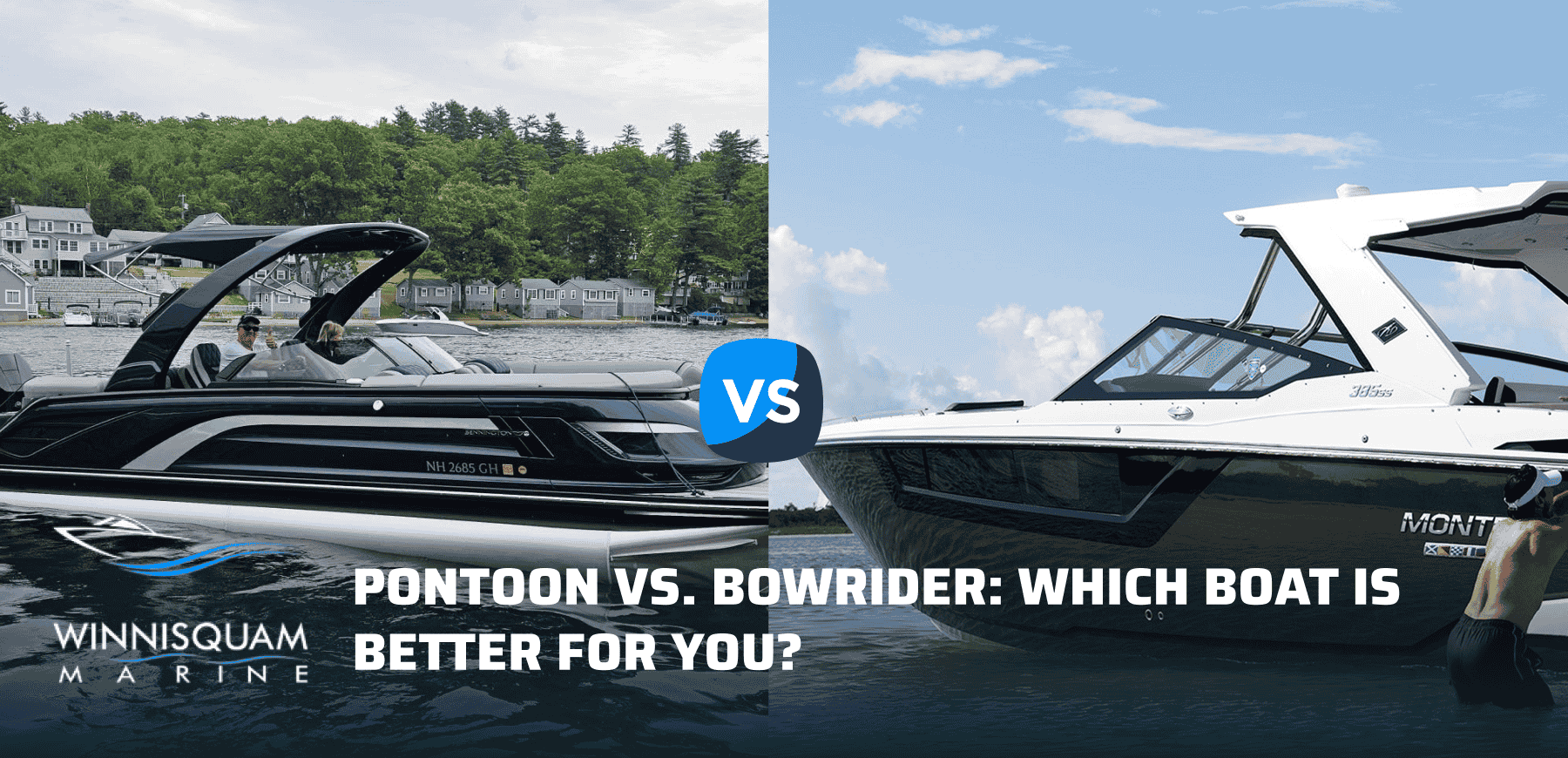
We see the same trade on Lake Winnipesaukee every few seasons. A family buys a 20-foot bowrider, runs it for two summers, then trades it for a 22-foot tritoon. The bowrider is faster and handles the afternoon chop better. It also seats seven, and they regularly have ten aboard. Most go back and forth for a year before admitting the boat doesn’t fit how they use the lake.
That’s the version of this question worth answering. Not which boat is better, but which compromise you’d rather live with.
Comparing Seating and Passenger Capacity
A 22-foot pontoon seats 11 to 12 people. A 22-foot bowrider seats seven to nine on paper and realistically carries six in comfort once a cooler, towels and gear are on board. The deck layout explains the gap. A pontoon puts a flat rectangular deck on top of the tubes and uses nearly all of it. A bowrider shapes seating around a V-hull, which narrows toward the bow and loses usable width to the hull form itself.
If group size is the deciding factor, the comparison is over before it starts. Nothing about a bowrider closes a four-person gap.
Speed and Rough Water Handling
The bowrider wins in two places, and rough water is the first. The V-hull cuts through chop rather than riding over it, and the difference is obvious on an open basin in the afternoon. The southwest wind builds real chop across Lake Winnipesaukee most summer afternoons, and a base two-tube pontoon running 60 or 90 horsepower will be slapping through it while a bowrider the same length stays settled.
Speed is the second. A 150 horsepower bowrider will run 40 to 45 miles per hour. A comparably powered two-tube pontoon tops out closer to 25. Performance-tubed pontoons close most of that gap, but a bowrider of the same length and engine will generally still be quicker and will feel quicker, because the helm position and the hull response both reinforce it.
More Space, Comfort, and Stability
The pontoon takes back space, stability at rest, and ease of use. The flat deck means people can move around while the boat is anchored without anyone shifting weight to compensate. Boarding from the water is easier because the deck sits lower and the gates are wider. For families with young children or anyone with mobility limits, that difference gets decided in about thirty seconds on the first boarding.
Shallow draft matters on New Hampshire lakes more than people expect. Tubes draw less water than a V-hull, which means sandbars and shallow coves on Lake Winnisquam that a bowrider has to stay clear of are accessible. Anchoring in two feet of water for an afternoon is a pontoon thing.
Which Is Better for Watersports?
The traditional answer is bowrider, and for serious wakeboarding and slalom skiing it is still bowrider. The hull produces a cleaner wake, the boat accelerates harder from a stop with a rider in the water, and the transom layout is built around the activity.
What has changed is the middle of that range. A performance-tubed tritoon with 150 to 300 horsepower pulls tubes and intermediate skiers perfectly well, and it does it while carrying eleven people instead of six. A decade ago recommending a pontoon for watersports would have been a stretch. Now it depends on how serious the watersports actually are, and most families overestimate that when they are buying.
We won’t pretend this one resolves cleanly. If someone in the family wants to learn to wakesurf properly, a dedicated watersports boat beats both options and the comparison on this page is the wrong comparison. If the honest answer is tubing and the occasional ski run, the capacity advantage of the pontoon probably outweighs the wake quality of the bowrider. Where exactly that line sits is a judgment call, and reasonable people put it in different places.
Comparing Resale Value
Pontoons hold value better than bowriders in this market. Demand for used pontoons on northern lakes is consistently strong, partly because the buyer pool is wider. A used bowrider appeals to people who want speed and watersports. A used pontoon appeals to almost everybody.
At three to five years old, a well-maintained pontoon from a strong brand typically holds 60 to 75 percent of its original price. Bowriders in the same age bracket often sit lower, and entry-level bowriders lower still. On a 50,000 dollar purchase that spread is worth several thousand dollars at sale time, which is money that rarely enters the buying conversation.
Fuel, Storage, and Maintenance
The two categories cost similar amounts to own, with one exception. Winter storage is priced per foot, so length drives it more than hull type. Insurance tracks value and horsepower. Fuel tracks engine size, and this is where the difference appears, because bowriders are typically bought with bigger engines relative to their length.
A 150 horsepower bowrider running 60 hours a season burns noticeably more fuel than a 90 horsepower pontoon over the same period. Over ten years that adds up to real money and it never shows up in a purchase comparison.
Comparing Both Boats Side by Side
Figures below reflect typical configurations in the 20 to 22-foot range rather than the limits of either category.
| Feature | Pontoon | Bowrider |
|---|---|---|
| Seating, Realistic | 10 to 12 | 6 to 8 |
| Top Speed, Typical | 22 to 28 mph, more with performance tubes | 38 to 48 mph |
| Rough Water | Adequate, better with three tubes | Better |
| Stability at Rest | Excellent | Moderate |
| Watersports | Tubing and casual skiing | Full range |
| Shallow Water | Shallow draft | Limited |
| Resale at 3 to 5 Years | 60 to 75 percent | Typically lower |
| Best Suited To | Groups, cruising, swimming | Smaller crews, speed, towing |
When a Deck Boat Makes More Sense
Neither category is the only answer. Deck boats put a wide, flared bow on a V-hull, which wins back much of the pontoon’s deck space while keeping V-hull handling in chop. They get less attention than either boat on this page, yet they solve the exact problem this comparison creates. If your usual crew is six to eight and someone still wants to ski, walk a Bayliner deck boat before you commit either way.
Finding the Right Boat for Your Needs
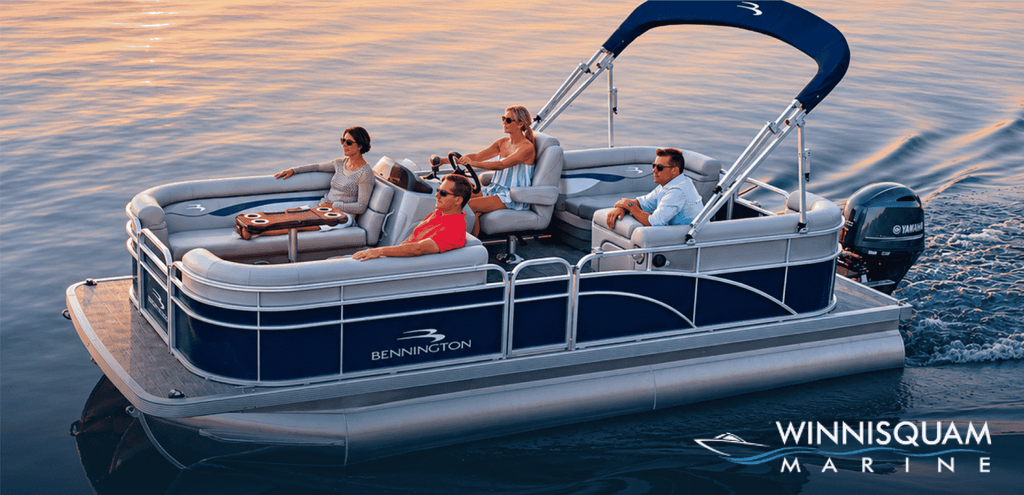
Count the people who will be on the boat on a normal Saturday, not the maximum you can imagine. If that number is eight or more, pontoon boats are the answer regardless of everything else on this page. If it is five or fewer and somebody wants to ski seriously, the bowrider is the answer. The hard cases sit in between, and that’s where a deck boat or a performance tritoon usually settles it. Still torn? Rent one of each for a day on Lake Winnisquam and the answer tends to show up by lunch.
Frequently Asked Questions
Is a pontoon or bowrider better for families?
Pontoon, in most cases. More seating, easier boarding, better stability at rest and more room for children to move around safely. Bowriders suit smaller families who prioritize speed and watersports.
Can you water ski behind a pontoon boat?
Yes, with adequate horsepower. A performance-tubed pontoon with 150 horsepower or more pulls skiers and tubes well. For slalom and wakeboarding at a competitive level, a V-hull produces a better wake.
Which costs more to own, a pontoon or a bowrider?
Similar in most categories. Storage is priced by length rather than hull type. The real difference is fuel, since bowriders typically carry larger engines for their length. Pontoons tend to hold resale value better, which lowers total cost over a full ownership cycle.
Which boat is better for Lake Winnipesaukee?
Winnipesaukee builds chop across the open basin most summer afternoons. A bowrider handles it comfortably. A base two-tube pontoon does not. A performance-tubed or three-tube pontoon handles it well and keeps the capacity advantage, which is why that configuration is common on the big lake.
Is a pontoon or bowrider easier to trailer and store?
Bowriders are generally narrower and easier to trailer. Pontoons are wider and tritoons need a three-bunk trailer and often a heavier tow vehicle. For storage, length drives the cost on both.