Sticker price on an entry-level pontoon: about $22,000. What the same buyer spends in the first twelve months: closer to $29,000 once the trailer, registration, insurance, storage, and a season of fuel are added up.
The gap between those two numbers is where most first-time buyers get caught out. The purchase price is the number everyone researches, and it is the easier half of the question.
Boat Prices by Type
Prices move with length, engine size, and build quality more than with brand name, though brand matters for resale. These are current market ranges for new boats.
Pontoons
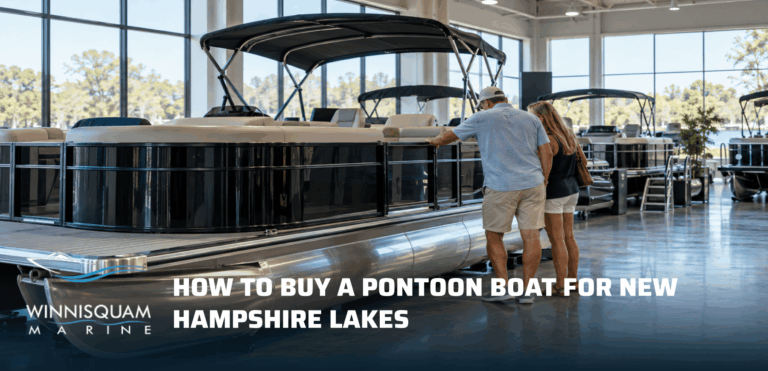
Entry-level 17- to 18-foot models start around $22,000 to $30,000. A 20 to 22-foot boat with a performance package and a 90 to 150 horsepower outboard lands in the $45,000 to $80,000 range. A confirmed example from the current market is a 22-foot Bennington with the Sport Performance System at $62,995. Fully loaded tritoons with twin engines run past $100,000.
Bowriders and Deck Boats
An 18- to 20-foot bowrider with a 115- to 150-horsepower outboard typically runs $35,000 to $60,000. Deck boats sit in similar territory. Sport boats from builders like Monterey start higher, generally $90,000 and up for a 23-foot stern drive, because the hull construction and interior finish are a different tier.
Fishing Boats
A 16 to 18-foot aluminium fishing boat with a 60 to 90 horsepower motor runs $25,000 to $45,000. Fibreglass bass boats and centre consoles with larger engines move into the $50,000 to $90,000 range.
Used
A three- to five-year-old boat typically sells for 60 to 75 percent of its original price, which makes the used market the single biggest lever on this whole question. A five-year-old 23-foot pontoon with a performance package often costs about what a new base 20-footer does.
The Cost of Your First Year
Beyond the purchase price, budget $4,000 to $8,000 for the first twelve months on a mid-size boat. That breaks down roughly as follows.
Trailer
$2,000 to $5,000 if it does not come with the boat. Many dealers package boat, motor and trailer together, which is usually cheaper than buying the trailer separately. A tritoon needs a three-bunk trailer rather than a standard two-bunk, and it may need a heavier tow vehicle, which is a cost that catches people after the purchase rather than during it.
Registration and Taxes
New Hampshire boat registration runs roughly $25 to $100 annually depending on length. Sales tax does not apply in New Hampshire, which is a meaningful saving against neighbouring states and a reason some out-of-state buyers purchase here. Confirm current fees with the NH Department of Safety before budgeting.
Insurance
Typically $300 to $1,000 a year for a recreational boat under 26 feet. Rates depend on value, horsepower, and operator history.
Storage
Winter storage in the Lakes Region generally runs $40 to $90 per foot for the season, depending on whether it is indoor or outdoor and whether winterisation and shrink wrap are bundled in. A 22-foot boat is therefore somewhere between $900 and $2,000 for the off-season. Slip fees during the season are separate and vary widely by lake.
Fuel
A 90 horsepower four-stroke burns roughly 6 to 9 gallons per hour at cruising speed. A 300 horsepower engine on a larger tritoon can burn 25 to 30. At 60 hours a season, which is about average for a recreational owner, that is a $700 to $3,500 swing depending entirely on how the boat is powered.
Maintenance
Routine annual maintenance runs $500 to $1,200. Winterisation is $300 to $700 on top of that for a single outboard.
Is the 10% Rule Accurate?
A rule of thumb that circulates among boat owners holds that annual ownership costs run about 10 percent of the purchase price. It is a crude figure, and it breaks down at both ends of the range. On a $25,000 boat, $2,500 a year is roughly right. On a $150,000 boat, 10 percent overstates it, because insurance and storage do not scale linearly with price. It is still a better starting point than most buyers begin with.
Comparing New and Used Boats
The case for new is a factory warranty, the configuration you specify, and no history to evaluate. The case for used is that somebody else absorbed the first three years of depreciation and you can get substantially more boat for the same money.
I go back and forth on this one. The warranty on a new outboard is worth real money, and engine problems are the expensive kind. But a well-maintained five-year-old boat with documented service records is a genuinely better value on paper, and the premium for new is harder to justify once you have seen what the used market offers at the same price. Which way it falls depends on how much risk you are comfortable carrying and how good you are at reading a maintenance history.
Boat Financing and Monthly Payments
Most buyers finance. Terms on marine loans typically run 10 to 15 years on larger purchases and 5 to 7 on smaller ones, which is longer than auto financing and keeps monthly payments lower than people expect. A $50,000 boat at current rates over 12 years lands somewhere in the $450 to $550 a month range. Rates and terms vary by lender and credit profile, and comparing financing options before defaulting to a dealership rate is worth the hour it takes.
Why Some Boats Cost More to Own
Across the full range of boat types, the single biggest variable in running cost is engine size rather than hull type or length. Two 22-foot boats with the same purchase price can differ by $2,000 a year in fuel alone if one has a 115 horsepower motor and the other has a 300. That difference compounds across a decade of ownership and rarely shows up in a purchase decision.
Hull configuration is the second variable. A tritoon costs $10,000 to $25,000 more than a comparable two-tube boat up front, carries a bigger engine, burns more fuel, and needs a heavier trailer. It also holds resale value better and handles rough water in a way that a base pontoon cannot. Those two facts pull in opposite directions, and the right call depends on which lake you boat on.