A boat comes out of storage in May, the engine turns over, and the water pump pushes nothing. The impeller cracked sometime over the winter while the engine sat dry. That is a $150 to $400 job at most shops, and it is almost always traceable to a maintenance item somebody skipped the previous fall.
Most maintenance checklists are organised by part of the boat. Hull, engine, electrical, trailer. That is a useful way to write a list and a terrible way to use one, because nobody walks down to the dock thinking about categories. They think about what they have not done in a while. So this one runs by frequency instead.
After Every Boat Trip
This is the five-minute version and it is the one that prevents the most expensive problems later. Flush the engine with fresh water if you boat in salt or brackish water. On a freshwater lake, flushing matters less, but running the engine for a minute at the dock to clear the cooling passages is still worth doing.
Wipe down the vinyl before it dries. Sunscreen, drink spills and lake water all leave residue that sets into the grain over a few days and becomes much harder to remove later. Check the bilge, pull the drain plug, and make sure nothing is sitting in standing water overnight.
On an aluminium hull, rinse the tubes if you have been in anything other than clean water. The 25-inch tubes on most modern pontoons oxidise slowly in freshwater, but algae left to bond over several weeks is a scrubbing job instead of a rinsing job.
Monthly Boat Maintenance
This is the section that does the most work and the one most owners skip. Set aside about 45 minutes.
Engine
Check the oil level and look at the colour on the dipstick. Fresh four-stroke oil is light amber. Dark is normal after a few dozen hours. Milky or grey means water has gotten in, and that is a seal problem rather than a maintenance item, so stop and get it looked at.
Check the fuel filter and the water separator. Ethanol-blended fuel pulls moisture out of the air, and the separator bowl will show you how much water the system has collected. If there is water sitting in it, drain it and treat the tank.
Look at the propeller. Dings on the blade edges cost you fuel economy and put vibration through the lower unit. Fishing line wrapped around the prop shaft is the other thing to check, because it works its way into the seal and causes exactly the kind of leak that shows up as milky gear oil three months later.
Electrical
Test every navigation light, the bilge pump and the horn. Check the battery terminals for corrosion and make sure the connections are tight. Loose battery terminals cause intermittent electrical faults that are maddening to diagnose and take two minutes to prevent.
Safety Gear
Count the life jackets against your passenger capacity, check the fire extinguisher gauge, and look at the expiry date on the flares. This takes 90 seconds and is the first thing Marine Patrol asks for.
Every 100 Hours or Annually
Mercury specifies a 100-hour service interval on its FourStroke outboards, and most owners on a northern lake hit that number somewhere in the second or third season rather than within one summer. The service covers an oil and filter change, lower unit gear oil, spark plugs, fuel filter, and an inspection of the water pump and impeller.
The impeller is worth singling out. It is a rubber component that sits in the lower unit and pushes cooling water through the engine, and it wears whether you use the boat or not. Manufacturers generally call for replacement every two to three years. In practice, a lot of owners run them for five or six and find out the hard way, usually on the first startup of the season when the telltale stream does not appear. It is a cheap part doing a job that the entire engine depends on.
Whether to do the oil change yourself is a real question and I do not think there is a clean answer. The job is not difficult and the parts cost maybe $60. But the lower unit gear oil change is where most of the diagnostic value sits, because the colour of the old oil tells you whether a seal is failing, and that is easier to read if you have seen a hundred of them. Plenty of owners do their own oil and have a service department handle the lower unit. That split makes more sense than it sounds.
Preparing Your Boat for Winter
In the Lakes Region, the practical deadline is around October 15. Most years the first damaging freeze lands within a week of that date in either direction, and a boat with water still in the cooling passages when it arrives can crack a block.
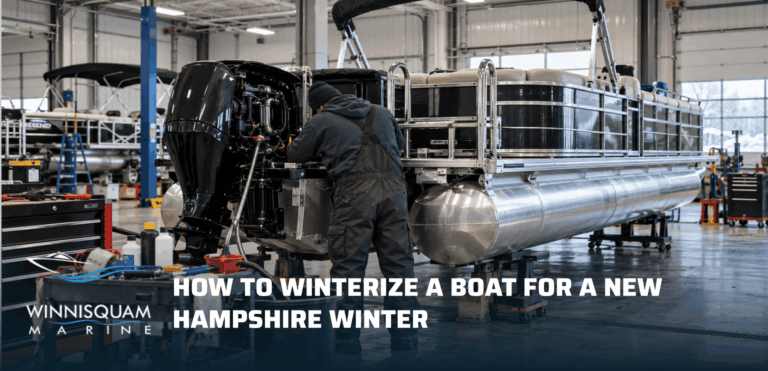
Winterisation covers the cooling system drain, fogging the cylinders, fuel stabiliser, an oil change before storage rather than after, battery removal, and shrink wrap. Fuel treatment matters more than people expect. Ethanol fuel left untreated for six months can phase-separate, leaving a water and ethanol layer at the bottom of the tank and gum in the injectors. Star Tron and STA-BIL Marine are the two products most shops in the region use.
Pull the battery and store it somewhere above freezing on a maintenance charger. A fully charged lead-acid battery will not freeze at New Hampshire winter temperatures. A half-discharged one will, and it will not recover.
Annual Boat Maintenance Costs
Annual maintenance on a mid-size outboard boat runs somewhere between $500 and $1,200 depending on how much you do yourself and whether the 100-hour service falls in that year. Professional winterisation is typically $300 to $700 for a single outboard, with shrink wrap adding $8 to $14 per foot on top.
That range shifts with the boat. A 17-foot aluminium hull with a 60 horsepower motor sits at the bottom of it. A 25-foot tritoon with a 300 horsepower engine and a stern drive will sit above the top of it, because every consumable is bigger and the drive unit adds service points that an outboard does not have. If you are still deciding between hull types, the maintenance difference over ten years is not trivial and is worth factoring in alongside the purchase price.
Don’t Let Your Boat Sit Too Long
Use the boat. Engines that sit develop more problems than engines that run. Seals dry out, fuel goes stale, batteries sulfate, and the small faults that a regular user would catch in week two go unnoticed until spring. Across the range of lake boats, the pattern holds regardless of hull type or brand. The boats in the worst condition are rarely the ones with the most hours on them.