Tritoon vs Pontoon and Which One Should You Choose
If you are shopping for a pontoon and keep running into the word tritoon, the difference comes down to one piece of aluminum, a third tube running beneath the deck. That one change affects speed, handling, rough-water performance, towing capacity, fuel consumption, and price, and how much it matters depends on where you boat and what you do once you are out there. On a calm lake with a few people aboard and no particular interest in speed, the extra tube isn’t worth its cost. On a bigger, choppier lake with a full boat and somebody who wants to ski, it earns every dollar. Here’s how the two compare, so you can figure out which one fits the way you actually spend your weekends.
Pontoon or Tritoon Starts With What Is Under the Deck
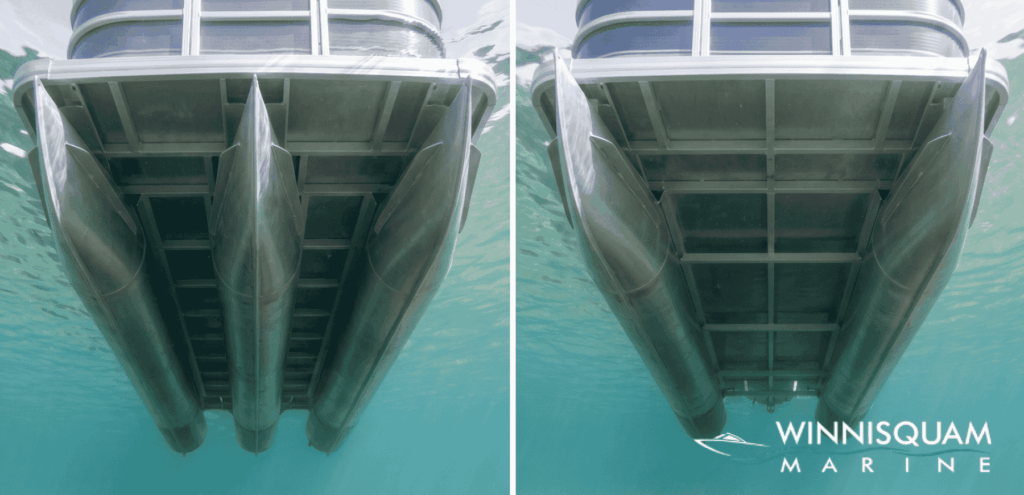
A standard pontoon rides on two aluminum tubes, called logs or toons, that run the length of the hull beneath the deck. A tritoon adds a third tube down the center. That’s the only structural difference between them. On most tritoons, the center tube sits a little lower than the outer two, so at speed the boat planes on all three points instead of rocking between two. It spreads the weight more evenly, keeps the stern from squatting under power, and stiffens the frame enough to carry a much bigger engine. Just about every way a tritoon outperforms a two-tube comes back to that third tube carrying more of the load down low.
Keep that in mind when you get to the price difference. You are not paying for nicer upholstery or a flashier name. You are paying for the extra aluminum, the reinforced cross members it needs, the wider trailer that comes with it, and the bigger engine it’s almost always rigged with. Whether it’s worth the money comes down to what you actually do out there.
Speed and Handling Beyond the Spec Sheet
What Happens When You Open the Throttle
A two-tube pontoon works well with engines in the 90 to 200 horsepower range. Push past that and the stern squats under load, handling loosens at higher speeds, and performance drops off when the boat is full. The tritoon’s third tube carries more structural load, which opens up 200 to 300-plus horsepower without those problems. In practice, a well-powered two-tube pontoon cruises at 18 to 28 miles per hour. A tritoon with the right engine gets on plane faster, holds speed under a full load, and reaches 35 to 45 miles per hour or better. The difference in acceleration from a standing start with a full boat on board is noticeable before you get anywhere near top speed.
How Each Hull Handles a Corner
Twin-tube pontoons tend to lean away from turns at speed. At low speed you barely notice it, but push the boat hard through a corner and it starts to feel like it’s sliding sideways instead of tracking. The center tube changes that. A tritoon rides on its center tube at speed with the outer two stabilizing, so in a turn it stays flat or leans slightly into the corner. Drive one through a fast sweeping turn, then go back to a twin-tube, and you feel the difference right away. It’s why most people who switch don’t go back.
What Happens When the Water Gets Rough
On a calm morning, a two-tube pontoon is comfortable and handles fine. That changes when the water does. The southwest wind on Lake Winnipesaukee kicks up chop across the Broads most summer afternoons, and in that kind of water you feel the gap between a twin-tube and a tritoon fast. The three-tube hull stays settled, rides more predictably, and doesn’t force you to back off the throttle to keep everyone comfortable. On smaller, protected lakes it matters less, and a well-powered two-tube handles most days without trouble. If you’re running open water in the afternoon on a regular basis, that’s where the third tube pays for itself.
Where Each Boat Makes the Most Sense
The right call comes down to what you actually do out there most weekends. The same third tube that helps in rough water also adds weight, cost, and fuel burn. It’s only worth it if what you’re buying the boat for actually puts it to use.
Best for Fishing and Relaxed Cruising
The two-tube pontoon is the right call. It is quiet at idle, lighter to launch, runs on a smaller engine, and is stable at rest. The extra horsepower of a tritoon adds nothing to a morning of still-water fishing.
Best for Family Days and Larger Groups
Either option works with a modest crew. As the head count climbs toward ten or twelve, three tubes spread the weight more evenly and performance stays consistent. On a full two-tube pontoon, you feel how the boat sits lower and responds differently with everyone aboard. On a tritoon, the gap is smaller.
Best for Tubing, Skiing, and Wakeboarding
For watersports, the tritoon is the boat. More horsepower means it gets back on plane faster after a rider falls, holds a steadier pull, and carries the speed you need to get a wakeboarder up. A twin-tube can drag a tube around at moderate speed and keep the kids happy, but anyone who’s spent time behind a proper tow boat will hit the ceiling within a few runs.
Tritoon vs Pontoon by the Numbers
Here’s the side-by-side. These are typical setups for similarly sized boats on the market right now, not the top end of what either hull can do. A performance-packaged two-tube with 200 horsepower will beat a base tritoon in a couple of these categories, so use it as a general guide, not a spec sheet for one specific boat.
| PONTOON (TWO-TUBE) | TRITOON (THREE-TUBE) | |
| TUBE COUNT | Two Aluminum Tubes | Three Aluminum Tubes |
| TYPICAL NEW PRICE | More Affordable Entry | $10K to $25K More |
| HORSEPOWER | 90 to 200 HP Typical | 150 to 300+ HP Capable |
| TOP SPEED | 18 to 28 MPH | 35 to 45+ MPH |
| TURN HANDLING | Outside Lean at Speed | Flat or Leans into Turns |
| ROUGH WATER | Good in Calm Conditions | Noticeably Better in Chop |
| FUEL USE | Lower at Typical Speeds | Higher With Larger Engines |
| TOWING WEIGHT | Lighter, Easier to Tow | Heavier, Bigger Tow Vehicle |
| FULL LOAD BEHAVIOUR | Rides Lower in Water | Stays More Level Under Load |
| IDEAL FOR | Fishing, Cruising, Calm Lakes | Watersports, Big Lakes, Performance |
What You Will Pay Beyond the Purchase Price
The Extra Costs Behind the Third Tube
Expect to pay $10,000 to $25,000 more for a tritoon than a comparably sized two-tube pontoon. That gap reflects the extra aluminum tubing, the reinforced cross members the three-tube structure requires, the wider trailer it needs, and the larger engine that almost always comes packaged with it. It also rarely stops at the sticker. A tritoon needs a three-bunk trailer instead of a standard two-bunk, and a tow vehicle with more pulling capacity, so buyers who haul from home to a public ramp sometimes find themselves upgrading a trailer or a truck before the boat ever touches water. None of it is padded margin. It’s what the added capability costs once you add everything up.
The Ongoing Cost of More Horsepower
Fuel use follows the engine, not the tube count. A 90-horsepower Mercury outboard on a two-tube burns a lot less fuel than a 250-horsepower motor on a tritoon running the same days on the water. Cruise at moderate speeds most of the time and the gap narrows. If performance is part of why you bought the tritoon, it shows up in your fuel bill every weekend of the season. On the mechanical side, the service work is nearly identical between the two. Engines, steering, electrical, and hardware get maintained the same way no matter what’s underneath. The difference is engine size, and a bigger engine costs a bit more to service.
What to Expect When It Is Time to Sell
Both hulls hold their value well compared to most boats, since aluminum lasts and demand for used lake boats stays strong. A well-kept two-tube from a quality builder draws plenty of buyers because affordable lake boats are always wanted. A tritoon pulls in people who want the performance without paying new-boat prices, so clean used pontoons and tritoons tend to move quickly. The catch is the higher purchase price, which means a tritoon loses more total dollars to depreciation in the first three to five years, even if the percentage is about the same. Worth keeping in mind if you might sell within a few years.
Making the Final Tritoon vs Pontoon Decision
Most of the confusion in this decision comes from comparing boats in the abstract rather than against a specific use case. Here is the clearest way to sort it.
Buy the Pontoon if:
- You boat on a smaller or calmer lake where rough conditions are occasional rather than routine
- Fishing, anchoring, and relaxed cruising are the core of your time on the water
- Budget matters and you want the most boat for the money without paying for capabilities you will not use
- You tow from home and want a lighter setup that most trucks handle without strain
- Your passenger count is typically modest and consistent
Buy the Tritoon if:
- You regularly deal with afternoon chop on open water and want a hull that handles it properly
- Watersports are a real part of your weekends, not something that comes up twice a summer
- You run a full boat regularly and want the hull to stay composed and consistent under load
- Speed and performance are primary features for you, not footnotes
- You have the tow vehicle, the trailer capacity, and the budget to absorb the higher purchase price and running costs
Neither boat is a compromise. A quality two-tube pontoon is not a budget version of a tritoon. It is a different boat for different conditions. The Tritoon is better in the situations it was designed for. The standard pontoon covers everything else without apology.
See the Difference in Person at Winnisquam Marine
Wherever this decision lands for you, Winnisquam Marine has been the local answer since 1977, with new and used Bennington pontoons and tritoons, Mercury outboards, and the service team to back all of it up at three Lakes Region locations on Lake Winnisquam, Lake Winnipesaukee, and Ossipee Lake. Browse our current pontoon boats in New Hampshire to see both hull types in stock, or visit the Belmont Lake Winnisquam location to walk the showroom floor and feel the difference between an SPS two-tube and an ESP tritoon in person before you decide.
Frequently Asked Questions
A tritoon is a type of pontoon boat. Both have the same open deck format above the waterline. The difference is the number of aluminum tubes underneath, two on a standard pontoon and three on a tritoon. The third tube changes the performance profile, the horsepower headroom, and the price.
A well-powered tritoon typically reaches 35 to 45 miles per hour or better. A comparably sized two-tube pontoon cruises at 18 to 28 miles per hour. The gap comes from the tritoon’s ability to support a larger engine without the hull squatting or handling becoming unstable under power.
For watersports, open water, and a full boat on a bigger lake, the extra cost pays off in ways you’ll notice. For calm-water fishing, smaller groups, and relaxed lake days, a well-built two-tube covers all of that without giving anything up. The question is whether your weekends actually use what the third tube gives you.
It depends on both the truck and the specific boat. Tritoons are heavier than two-tube pontoons of the same length and require a three-bunk trailer. Check the combined weight of the boat, engine, trailer, fuel, and gear against your truck’s rated tow capacity before assuming your current setup works.
SPS stands for Sports Performance System. It’s one of Bennington’s three-tube tritoon packages, built around three round 25-inch tubes with lifting strakes and performance foils. It’s rated for engines up to around 200 horsepower and gives you tritoon handling and stability in a lighter, more affordable build than the pricier ESP package.
Both are three-tube tritoon packages, so the difference is the center tube and the price tier. SPS (Sports Performance System) runs three round 25-inch tubes and suits mid-range horsepower. ESP (Elliptical Sport Package) swaps in a larger 32-inch elliptical center tube that adds buoyancy and banks the boat into turns like a V-hull, which is why it’s the pick for higher horsepower and heavy watersports. The Q Series builds on ESP with a four-tube setup and twin-engine capability.