7 Types of Boats for Every Kind of Lake Day
Walk into any conversation about buying a lake boat and you will hear five different opinions in the first ten minutes. Your neighbor swears by his pontoon, your brother-in-law won’t shut up about his wake boat, and the guy at the marina keeps mentioning a deck boat like it solves everything. They are not wrong, exactly. They’re each describing the right boat for their own lake and their own weekend, not yours.
Picking between the types of boats for lakes makes a lot more sense once you stop asking which one is best and start asking which one fits how big and rough your water gets, how many people usually come along, and what you do once you’re out there. Below are the seven categories that come up most for lake use, what each one is built for, and where each one falls short.
1. Pontoon Boats for Cruising, Fishing, and Entertaining
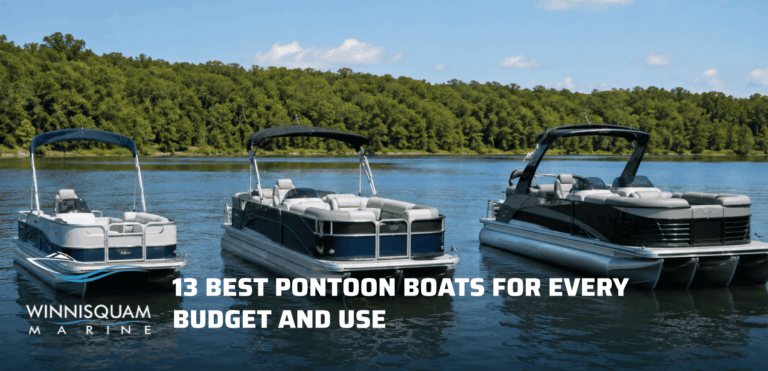
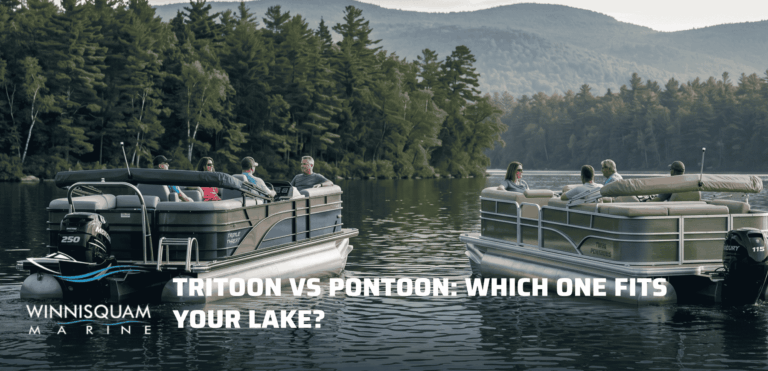
A pontoon rides on two or three aluminum tubes beneath a flat, open deck, which is exactly what makes it the most popular type of boat for lakes in the country. The flat deck means more usable space per foot of boat than almost any other hull design, the tubes hold it steady at rest, and the shallow draft handles depths that would worry a deep-V hull. Where a pontoon shows its limits is in rough water and flat-out speed. A standard two-tube setup isn’t built for big chop and will feel busy when the wind picks up on a larger lake, though performance-tubed and tritoon configurations close that gap a lot.
2. Deck Boats Give You Pontoon Space on a Faster Hull
A deck boat takes the wide-open deck space of a pontoon and puts it on a V-hull instead of tubes. It handles light chop more comfortably than a pontoon, runs faster, and still gives a big group room to move around without feeling like a bowrider’s tight cockpit. The flared bow widens the front of the boat compared to a bowrider, which is where most of that extra deck space comes from. Deck boats don’t have the brand recognition of a pontoon or the performance reputation of a bowrider, even though they often make more sense for a family that wants a bit of both.
3. Bowriders for Smaller Groups and Faster Days
A bowrider‘s defining feature is exactly what the name says: seating built into the bow, ahead of the windshield, on top of the cockpit seating behind it. That V-hull is what separates a bowrider from a pontoon or deck boat in how it handles. It cuts through chop, turns sharper, and accelerates faster, which is why bowriders are the boat most tied to watersports like skiing, wakeboarding, and tubing. The tradeoff is capacity. A bowrider that holds as many people as a pontoon has to be considerably longer to do it, and at anchor, it lacks the flat, walk-around stability of a pontoon or deck boat.
4. Fishing Boats Built Around the Catch
A fishing boat category covers a wide range, from small aluminum jon boats and bass boats to center consoles built for serious freshwater angling. What they share is a layout built around the activity rather than passenger comfort: casting platforms, livewells, rod storage, and a low profile that lets you fish standing up. A dedicated fishing boat is quieter at low speed, sips less fuel over a long day idling the shoreline, and costs considerably less to maintain than most categories here. The honest tradeoff is that it’s a worse pick for everything else, with limited capacity and nothing for watersports.
5. Family Boats That Can Handle Different Plans
A family boat is less a hull category than a label for boats that balance comfort, capacity, and light versatility across fishing, swimming, and casual cruising without specializing hard in any one of them. In practice, this usually means a well-equipped pontoon or deck boat with a layout chosen for a group rather than for performance. If your weekends mix fishing with the kids, towing a tube occasionally, and a lot of just sitting around enjoying the water, this is the category to start with, rather than picking a more specialized boat and hoping it stretches to cover everything.
6. Wake and Ski Boats Built for Watersports
Wake and ski boats are built around one job: creating the right wake or wave for whatever is happening behind the boat. Ballast systems, surf gates, and tower-mounted speakers and tow points are standard, and the hull is often shaped to push water a certain way rather than just slip through it. This category only makes sense if watersports are a recurring part of how your group uses the lake. The specialized hull and ballast add cost and cut versatility for general cruising or fishing, and on a small or narrow lake, a dedicated wake boat can be overkill, since the wake it throws needs open water to work with.
7. Canoes, Kayaks, and Small Craft for Quiet Water
Not every lake day needs a motor. Canoes, kayaks, and small rowboats remain genuinely useful on lakes with quiet coves, narrow channels, or simply for people who want a slower, more physical way to be on the water. They launch from almost anywhere, need no certificate or registration in most cases, and cost a fraction of any powered boat to buy and maintain. For solo trips, early morning fishing in tight water, or a second boat that lives on the dock alongside a bigger one, small craft fill a real gap that the other six categories on this list do not.
Compare the Main Types of Lake Boats
Once you know roughly how big and how rough your lake gets, and what your group actually does out there, this table narrows the seven options fast.
| BOAT TYPE | BEST LAKE SIZE | BEST FOR | TYPICAL CAPACITY | SKILL NEEDED |
| PONTOON | Calm, Small to Mid | Family Days, Cruising, Light Fishing | 8 to 12+ | Easy |
| DECK BOAT | Mid to Large | Bigger Groups, Swimming, Light Towing | 8 to 12 | Easy |
| BOWRIDER | Mid to Large, Some Chop | Watersports, Speed, and Smaller Groups | 6 to 9 | Moderate |
| FISHING BOAT | Any Size | Serious Fishing, Casting Room | 2 to 6 | Easy to moderate |
| WAKE/SKI BOAT | Larger, Open Water | Wakesurfing, Wakeboarding, Skiing | 8 to 12 | Moderate |
| SMALL CRAFT | Small, Quiet Coves | Solo Trips, Calm Paddling, Access | 1 to 3 | Easy |
The Right Boat Depends on the Lake
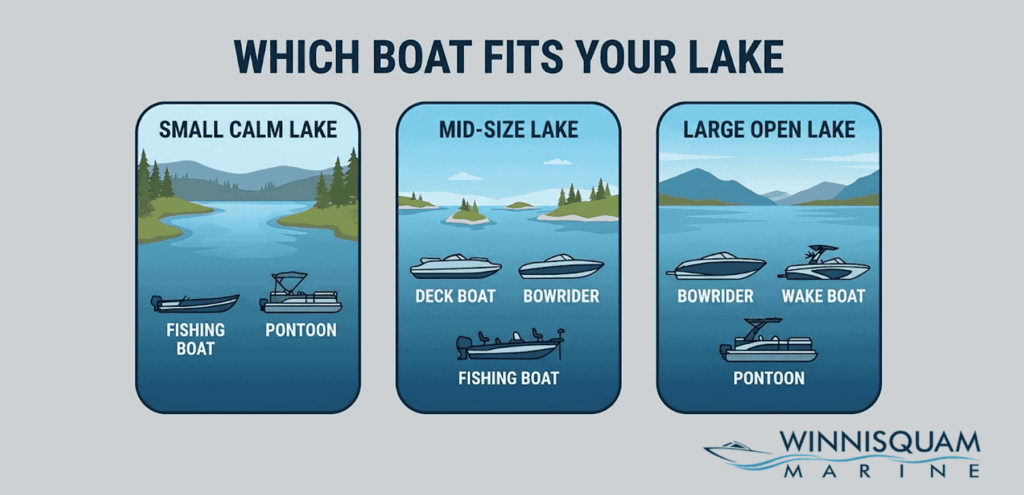
New Hampshire’s Lakes Region is a good example of how much this decision shifts from one lake to the next, and it puts three very different lakes in front of the same buyer, depending on which side of the state they are on. The same boat type question gets a different answer on each one.
- Lake Winnisquam: Smaller and more sheltered, where a pontoon, deck boat, or dedicated fishing boat covers nearly every realistic use case without anyone wishing for more performance.
- Ossipee Lake: Similarly calm and protected, a comfortable fit for the same lighter-duty categories rather than anything built for open-water chop.
- Lake Winnipesaukee: 72 square miles with a long open main basin, where the afternoon wind builds real chop most summer days, and where a bowrider, deck boat, or properly powered tritoon pontoon starts to make more sense than a base setup.
Local Experience Can Make the Choice Easier
Reading about seven boat types is one thing. Standing on a dock and actually picking the right one for your lake is another, and that gap is exactly where having someone experienced in the conversation pays off. The team at Winnisquam Marine has been helping buyers make this call since 1977, which means the advice you get is not a sales pitch dressed up as guidance, and it is shaped by decades of watching which boat type a given buyer actually keeps using year after year and which one quietly ends up for sale after one season. That kind of pattern recognition is hard to get from a spec sheet, and it is the difference between buying a boat that fits a brochure and buying one that fits your actual weekends.
That experience is backed by real inventory and real local knowledge, not just opinion. New and used pontoons, deck boats, bowriders, fishing boats, and family boats from Bennington, Bayliner, and Monterey are spread across three locations on Lake Winnisquam, Lake Winnipesaukee, and Ossipee Lake, so instead of researching alone and guessing, you can walk onto a lot and compare three or four categories side by side on the same visit. If you are still deciding rather than ready to buy, daily rentals on Lake Winnisquam and Lake Winnipesaukee let you spend a real afternoon on a pontoon or a bowrider before committing to either one, which settles more of this decision than another hour of reading ever will.
Frequently Asked Questions
What is the best all-around boat for a lake?
For most lakes and most groups, a pontoon or deck boat covers the widest range of activities without much compromise. Both hold steady at rest, board low and flat, and give a group room to spread out. Neither is the one you’d pick for serious watersports or serious fishing, but for general use, they’re the safest starting point for a first-time buyer.
What type of boat is best for a small lake?
Pontoons, deck boats, and dedicated fishing boats all work well on small lakes, since they don’t need open water or high speed to be worth taking out. Wake and ski boats are usually overkill on a small lake, because the wake they’re built to throw needs more room than a small body of water gives it.
Is a pontoon or a bowrider better for a lake?
It depends on group size and activity. A pontoon gives a bigger group more stable, comfortable space for relaxed cruising and light fishing. A bowrider cuts through chop, runs faster, and is the boat to have for towing skiers or wakeboarders, but it holds fewer people for its length and is less comfortable at anchor.
Can one boat handle both fishing and family fun?
Yes. Many pontoons, deck boats, and even some bowriders can be set up with fishing features like rod holders and livewells without giving up comfort for the rest of the group. A dedicated fishing boat makes sense if fishing is what you do most of the time, but for occasional fishing alongside general family use, a multi-purpose boat with a few fishing options usually beats owning two boats.
What boat is best for watersports on a lake?
Wake and ski boats are purpose-built for this with ballast systems and surf gates that create a consistent, shapeable wake. Bowriders handle watersports reasonably well at a lower cost. A performance pontoon with sufficient horsepower can also tow tubes and casual skiers, though it will not match a dedicated wake boat for serious wakesurfing.
How do I choose a boat size for my lake?
Smaller lakes generally favor boats under 20 feet that maneuver well in tighter water and are less of a hassle to launch and store. Larger, more open lakes often call for boats over 20 feet, both for comfort in chop and because the extra length adds stability when the wind picks up. Passenger count and typical activity matter as much as raw lake size when you settle on a final length.